
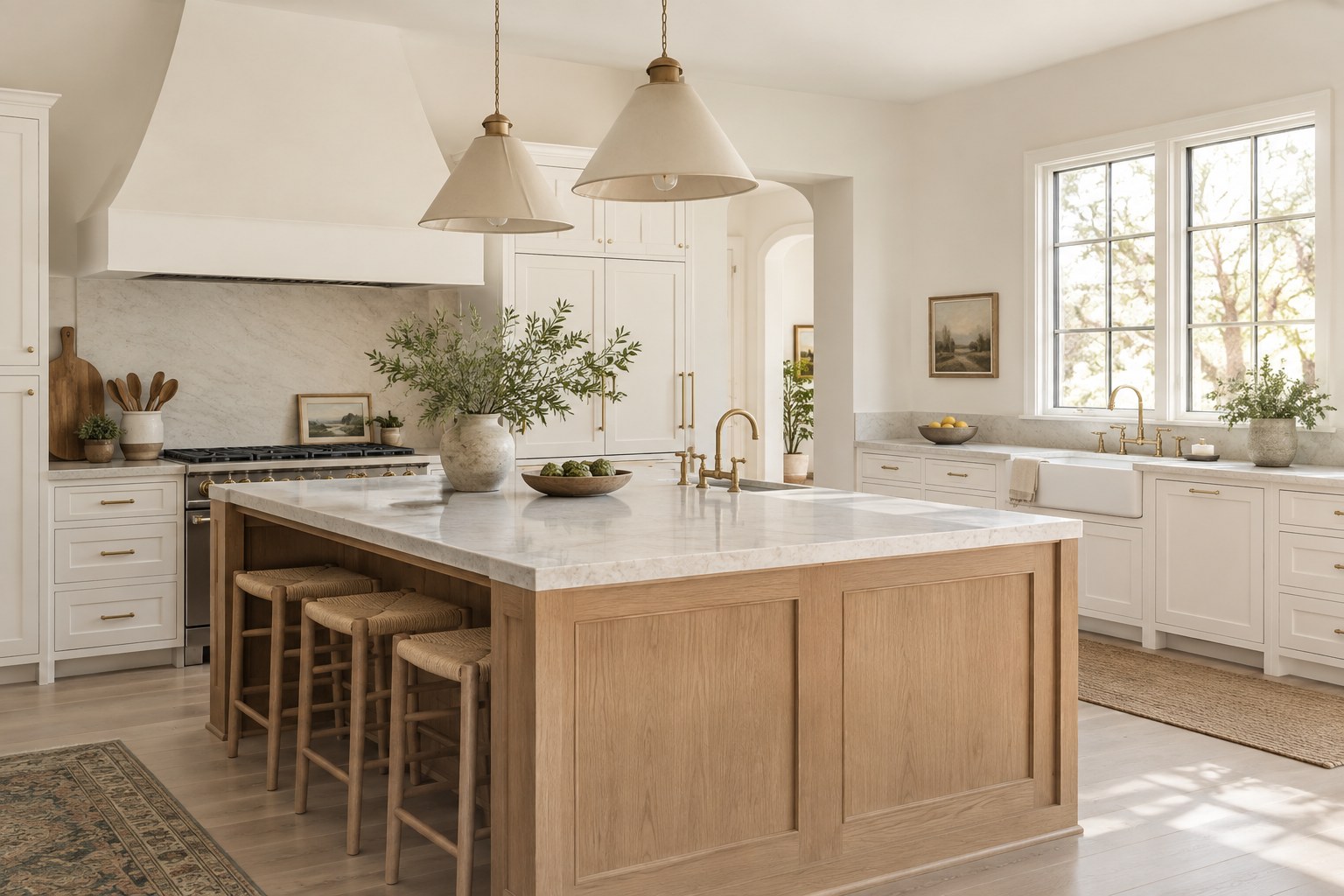
Start with the documented color character
Classic Gray sits near the off-white end of the gray range. Temperature is a useful description, but neighboring materials can change the impression. Classic Gray's lightness makes subtle separation its useful role; demanding a strongly outlined gray wall would suggest a different brief.
Why the white trim and pale limestone relationship matters
Pale limestone and white trim can leave little value contrast, so the decision may be about whether a second neutral is needed at all.
Classic Gray has an LRV of 73.67; Benjamin Moore Pale Oak OC-20 is 68.64. The difference is 5.03 points, with Classic Gray returning more light under the reference measurement. Pale Oak combines a light neutral appearance with the warm gray character identified by Benjamin Moore. This supplies a named color control; the LRV gap alone does not identify the warmer, greener or pinker paint.
Use Pale Oak as a control
Use Classic Gray and Pale Oak to clarify the temperature choice against white trim and pale limestone. Keep the sample edges touching the fixed material, and cover one color before judging the other. Near-neutrals can look noticeably different side by side; the final choice still needs to work on its own. Record the specific relationship you prefer, such as a clearer trim outline or a quieter connection to the floor.
Separate a persistent cast from a comparison effect
Retain it for a gentle wall-to-trim difference, not a pronounced gray outline. The undertones and neighboring colors covers that related choice.
Judge the temperature description against the full white trim and pale limestone arrangement. A warm or cool label is a useful starting category; it cannot guarantee that Classic Gray agrees with every material assigned the same label. The wood-floor pairing guide covers that related choice. Before ordering samples, compare room-planning features in the paint color visualizer roundup.
Sources & notes
Color specifications: Benjamin Moore Classic Gray OC-23. The recorded LRV is 73.67. Named comparison values come from the respective manufacturers; material schemes are editorial suggestions.
This guide reviews published color information and proposes practical sample checks. It does not claim first-hand paint testing or customer-review scores. Benjamin Moore does not sponsor or endorse this site. Product names and trademarks belong to their respective owners. Confirm the color in a physical sample and select the coating for the actual surface and finish.